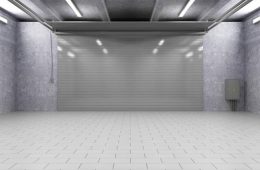

The garage is a multipurpose space. Depending on the day, it is a car park, a store room, a workshop, a laundry area or a gym. Each of those uses needs different light, from a bright, even glow for working on a project to a gentle light that stops you tripping over a step when you get home late. If your garage still relies on a single old bulb or a flickering fluorescent tube, these six tips will help you light it properly.
1. Switch to LED
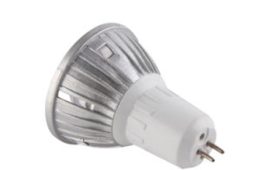
The first and easiest improvement is to replace old bulbs and tubes with LED. LED lighting uses far less electricity for the same amount of light and lasts much longer:
- A typical incandescent bulb lasted around 1,000 hours.
- Fluorescent tubes typically last somewhere around 10,000–15,000 hours.
- Quality LED fittings are commonly rated for 25,000–50,000 hours.
LEDs also deliver the same brightness at a fraction of the wattage, often around a fifth to a tenth of an equivalent incandescent bulb. Even if an LED costs more to buy, it usually works out much cheaper over its lifetime.
LEDs also perform well in garages that get cold in winter or very hot in summer, and they reach full brightness instantly, unlike many fluorescent tubes.
2. Use LED tubes or battens for overhead light
Linear lights are ideal for garages. A few well-placed LED battens or tubes give broad, even light across the whole space using fewer fittings than individual bulbs.
Choosing tube lengths
LED tubes and battens are commonly available in 60 cm, 120 cm and 150 cm lengths. Shorter lengths suit small or single garages; longer ones cover larger spaces efficiently. Run them parallel to the car so that light falls on both sides of the vehicle rather than straight onto the roof.
Replacing existing fluorescent fittings
Most standard T5 and T8 fluorescent tubes can no longer be placed on the EU market since 2023, so replacement tubes are getting harder to find. You have two options:
- Retrofit LED tubes: check the tube type (T8 or T5) and length, and use the same size. Depending on the tube and fitting, the old starter or ballast may need to be removed or bypassed, which is a job for a qualified electrician.
- Replace the whole fitting: a new LED batten or tri-proof fitting is often simpler, and a sealed tri-proof is a good choice for dusty or damp garages.
How much light do you need?
For a garage used mainly for parking and storage, around 100–200 lux is usually enough. For a workshop or hobby area, aim higher: roughly 300–500 lux at the workbench, more for fine detailed work. A lighting supplier can help you work out how many fittings you need for the size of your garage.
3. Add task lighting for the workbench
Overhead light alone tends to cast your own shadow over whatever you are working on. If you have a workbench, add dedicated task lighting:
- A linear LED fitting or LED panel mounted directly above or just in front of the bench gives bright, shadow-free light across the work surface.
- An adjustable lamp with a flexible arm, ideally with a clamp, lets you direct light exactly where you need it for fine work.
- For working on a car or motorbike, a portable LED work light on a stand acts as a movable floodlight, while a small rechargeable inspection torch is useful for checking tight spaces.
For work involving paint, wiring or anything where colours matter, choose lights with a high colour rendering index (CRI 90 or more if possible) and a neutral to cool white of around 4000–5000K.
4. Use motion sensors
Motion sensors stop lights being left on when nobody is in the garage, and they mean you never have to fumble for a switch with your hands full. They can also add security when fitted outside the garage door.
In a larger garage, you can split the lighting into zones so that only the part you are using lights up. Before buying, make sure the sensor is rated for LED loads and suits the fittings you are using. Our article Do motion sensors make any difference? explains the different types and settings.
5. Don’t forget low-level lighting
Sometimes a bright overhead light is more than you need, for instance when you are just popping into the garage to grab something from the freezer late at night. Low-level lighting provides a softer option:
- LED strip lights in an aluminium profile along the base of a wall or under shelving.
- Small step lights near any stairs or level changes between the garage and the house.
- Under-cabinet strips above a utility area or workbench.
Low-level lighting is also a simple safety improvement, especially on steps.
6. Use accent lighting to highlight
Finally, think about accent lighting. LED strips can mark the edges of steps, light the inside of cabinets, or outline the parking bay to make reversing easier. If you display a classic car, motorbike or memorabilia in your garage, a few adjustable spotlights or track lights with a lower brightness and warmer colour can create a striking effect.
Bringing it together
The best garage lighting combines several layers: bright, even overhead light, focused task lighting where you work, sensors for convenience and savings, and low-level or accent lighting for safety and character. Think about how you use the space and light each activity accordingly.
You can see LED battens, tubes, strip lights, sensors and spotlights suitable for garages at LTC LED Lighting in St Paul Street, Naxxar. If you need help choosing or fitting them, contact RG Alternatives and our team will advise you.