
Lighting an office well makes sound business sense. Costs need to stay within budget, but lighting should not be treated merely as an overhead. The right lighting has a considerable effect on the working environment and, in turn, on the comfort, health and performance of the people who spend their day there.
How office lighting affects people
Lighting is one of the most influential factors in any workplace. Poor lighting, whether too dim, too bright, flickering or full of glare, can contribute to eye strain, headaches and fatigue. Good lighting does more than avoid these problems; it helps people feel alert, comfortable and satisfied with their surroundings.
Light also affects our body clock. Most of us now work indoors, often with limited daylight, which can leave people feeling tired and listless. Well-designed lighting supports wakefulness during the day and helps set the mood of a space, which is why lighting is about much more than simple illumination.
Standards and light levels
In Europe, the main reference for workplace lighting is the standard EN 12464-1, which sets recommended light levels and quality criteria for different tasks. For typical office work such as writing, reading and computer use, it recommends a maintained illuminance of around 500 lux on the work area. Corridors and circulation spaces need much less, while detailed technical drawing needs more.
The standard also covers glare (through the Unified Glare Rating, or UGR, with a limit of 19 typical for office tasks), uniformity and colour rendering (a minimum CRI of 80 for offices). Employers in Malta also have general occupational health and safety obligations to provide suitable lighting. Standards set the minimum; good design goes further to create a space people enjoy working in.
Layered lighting and contrast
There is no one-size-fits-all solution. Different activities need different types and levels of light, and the best offices combine several layers:
- General (ambient) lighting: even light across the space, usually from LED panels, linear fittings or downlights.
- Task lighting: extra light where it is needed, such as desk lamps for detailed paperwork.
- Accent and feature lighting: for reception areas, branding walls, artwork and break-out spaces.
Creating some contrast between areas is no bad thing. Walkways and circulation zones can be lit to a lower level than workstations, which saves energy and gives the space a more dynamic, less monotonous feel.
Positioning and indirect light
Lighting position matters. Light should not reflect directly into people’s eyes from screens, glossy desks or other surfaces. Where possible, arrange luminaires so that rows of light run parallel to the windows and to the line of sight at desks, rather than directly above or behind screens.
Lighting the walls and ceiling as well as the desks makes a space feel larger, brighter and less enclosed. Suspended linear fittings that send light both downwards and upwards (direct/indirect) are an excellent way to achieve this in offices with higher ceilings.
Reducing glare
Glare is one of the most common complaints in offices and a key factor when choosing LED fittings. Look for:
- Panels and linear fittings with prismatic or micro-prismatic diffusers designed for low glare.
- A UGR rating of 19 or lower for areas with computer work.
- Flicker-free drivers, as flicker can cause discomfort even when it is not consciously noticed.
Whether you choose an LED panel layout or a continuous linear design, LED technology gives far more choice and flexibility than older fluorescent fittings.
Colour temperature and human-centric lighting
Most offices use neutral white light of around 4000K for workspaces, which feels bright and clear without being harsh. Warmer light, around 3000K, works well in break rooms, meeting lounges and reception areas, where a more relaxed atmosphere is wanted. Our guide to 3000K vs 4000K vs 5000K explains the differences.
Human-centric (or circadian) lighting goes a step further. Using tunable-white fittings and a timed control system, the colour temperature and intensity change through the day: cooler and brighter in the morning to support alertness, warmer and softer towards the end of the afternoon. This mirrors the natural pattern of daylight and can contribute to comfort and wellbeing.
Energy efficiency and controls
Employee comfort is essential, but energy efficiency is equally important. LED lighting offers excellent performance with substantially lower energy use and maintenance than older fluorescent systems. With most fluorescent tubes now phased out of the EU market, LED is also the practical choice for any new installation or refurbishment.
Controls add further savings:
- Daylight harvesting: sensors measure natural light and dim fittings near windows to maintain the target light level, so energy is not wasted on unnecessary artificial light.
- Presence and absence detection: lights in meeting rooms, toilets and storage areas switch off when unoccupied.
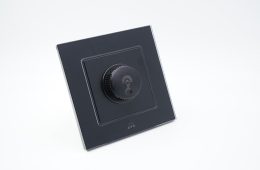
- Dimming and scheduling: lighting adapts to different tasks and switches off outside working hours. See Do dimmer switches save power?
Smart switches such as iotty can also help smaller offices schedule lighting and keep an eye on how it is used.
Plan it properly
The most effective office lighting starts with a proper design. A lighting calculation shows how many fittings are needed, where they should go and what light levels and glare ratings will be achieved, before anything is purchased. It also makes it easier to compare options and their running costs.
RG Alternatives provides lighting design with DIALux reports for offices, confirming lux levels and compliance with EU standards, followed by supply and installation of the selected LED fittings. You can also visit LTC LED Lighting in St Paul Street, Naxxar, to see office lighting options. Learn more about our DIALux lighting reports.