
Every LED light needs a driver. It is the component that converts mains power into the type of supply LEDs need, and it has a big influence on how well a lighting installation performs and how long it lasts. Unfortunately, driver quality varies widely, and a poor or mismatched driver can cause flicker, buzzing, uneven light, early failure or LEDs that do not light at all. This guide explains the main types of driver and how to choose the right one.
What does an LED driver do?
LEDs run on low-voltage direct current (DC), while the mains supply in Malta is 230V alternating current (AC). The driver converts one to the other and, crucially, controls the current flowing through the LEDs. Too little current and the LEDs are dim; too much and they overheat, lose efficiency and fail early.
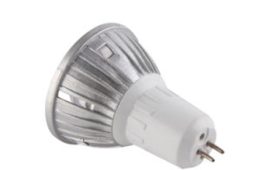
Many LED products, such as GU10 and E27 bulbs, LED tubes and most downlights, have the driver built in. Others, including LED strips, many panels, linear fittings, in-ground lights and some downlights, use a separate driver that you select and install.
Constant current or constant voltage?
The first and most important question is whether the LEDs need a constant current or a constant voltage driver. Using the wrong type is one of the most common causes of failure.
Constant current drivers
A constant current driver supplies a fixed current, typically somewhere between around 150 mA and 1,500 mA, while the output voltage varies within a range to suit the load. Common values include 350 mA, 500 mA, 700 mA and 1,050 mA. Downlights, linear luminaires, 60×60 panels, spotlights and high-power fittings are usually powered this way.
You can recognise a constant current driver because its label shows a fixed current and a voltage range, for example “700 mA, 9–42V DC”.
Constant voltage drivers
A constant voltage driver supplies a fixed voltage, usually 12V or 24V DC (sometimes 48V), and the current drawn depends on the load connected. LED strips and many low-voltage products use constant voltage, because they include their own resistors or regulators to control the current through each LED.
The label shows a fixed voltage and a maximum power or current, for example “24V DC, 100W”.
How to match a driver to your LEDs
For constant current fittings
- Current: the driver’s output current must match what the LEDs are designed for. A driver supplying more current than the LEDs are rated for will overheat and shorten their life; less current will make them dimmer.
- Voltage range: each LED typically drops around 2.6–3.2V. When LEDs are connected in series, add up their voltages and check that the total falls within the driver’s output range. For example, a group of small in-ground uplights in series might need around 28V in total, which a 9–42V driver at the correct current would handle comfortably.
- Power: check that the total wattage is within the driver’s rating.
For constant voltage products
- Voltage: must match exactly. A 12V strip on a 24V driver will burn out; a 24V strip on a 12V driver will barely light.
- Power: add up the wattage of all connected strips or fittings and allow headroom. Running a driver at around 80% of its maximum load is a common rule of thumb for reliability and longevity.
- Cable runs: long runs of low-voltage strip can suffer voltage drop, causing the far end to look dimmer. Feeding power at both ends or in the middle, or using 24V rather than 12V, helps.
Other things to consider
- Environment and IP rating: outdoor and damp locations need a driver with a suitable IP rating, or a weatherproof enclosure.
- Physical size: slim drivers are available for shallow ceiling voids and furniture, while others are designed to be remote-mounted.
- Heat: drivers dislike high temperatures. Give them space and ventilation, particularly in hot ceiling voids during the Maltese summer.
- Quality: look for low flicker, a good power factor, protection against short circuits and overheating, and a reasonable warranty.
- Inrush current: in larger installations, many drivers switching on together can trip circuit breakers. Datasheets list inrush current and the maximum number of drivers per breaker.
Dimming with LED drivers
If you want to dim your lighting, the driver must support the dimming method you plan to use. The main options are:
Phase-cut (leading edge and trailing edge)
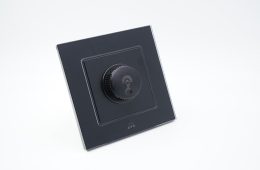
These dim the 230V mains supply and work with standard wall dimmers, which makes them convenient for homes. Trailing-edge dimming generally performs better with LEDs. However, compatibility between dimmers and drivers varies, so it is important to check the manufacturer’s compatibility list or test before installing.
0–10V and 1–10V
Analogue dimming uses a separate low-voltage control signal. It is simple and stable, but all fittings on the same control line dim together, so separate zones need separate circuits.
DALI
DALI (Digital Addressable Lighting Interface) is a digital system in which every driver has its own address. Fittings can be controlled individually or grouped and regrouped in software without rewiring. DALI Device Type 8 (DT8) drivers can also control colour temperature (tunable white) and colour. DALI is the preferred choice for offices, hotels and commercial buildings where flexibility and integration with sensors are important. Our article Do dimmer switches save power? explains how dimming contributes to energy savings.
Wireless and smart control
Increasingly, drivers and controllers support wireless protocols such as Bluetooth or Zigbee, which can be useful in refurbishments where new control cables are impractical.
Summary
- Identify whether your LEDs need constant current or constant voltage.
- Match the current (or voltage) exactly and check the voltage range and power.
- Allow for the environment, heat and available space.
- Choose the dimming method before you choose the driver.
- Buy quality drivers from reputable suppliers.
Choosing the right driver is just as important as choosing the right light. Our article on LED quality explains why the driver’s components are often what determines how long an LED product lasts. Our team at LTC LED Lighting in Naxxar can advise on drivers for strip lights and other low-voltage fittings, and RG Alternatives can specify the right drivers and controls for commercial projects. Find out about our LED lighting supply service.