
For shops, showrooms, offices, restaurants and car parks, lighting does far more than help people see. It shapes how customers feel about a space, how products look on display and how comfortable staff are through a working day. It is also a cost that runs every hour the business is open. LED technology has changed what commercial lighting can achieve, and it is now the standard choice for new installations and refurbishments across Malta. Here is why.
LED is everywhere for a reason
LEDs are so versatile that they are now found in almost every kind of lighting: homes, offices, traffic signals, vehicle lights, stadiums, stage shows and illuminated signs. The same qualities that make them suitable for these demanding uses, namely efficiency, durability, controllability and compact size, are exactly what commercial premises need.
A sound return on investment
Business owners want lighting that pays its way. LED does this in two ways.
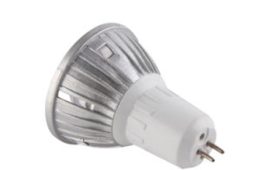
- Lower energy use. LED luminaires typically deliver the same or better light levels than fluorescent, halogen or metal halide fittings while using substantially less electricity. Savings of 50% or more on lighting energy are common when older systems are replaced, and higher where halogen spotlights are involved.
- Less maintenance. Quality LED fittings are typically rated for tens of thousands of hours. Fewer lamp changes means fewer maintenance call-outs, less disruption on the shop floor and lower spare-parts costs.
Lower energy use from lighting also means less heat released into the space, which can reduce the load on air conditioning, a meaningful benefit in Malta’s climate. The payback period depends on operating hours, the system being replaced and electricity tariffs, so it is worth calculating for your own premises. Businesses with long opening hours, such as supermarkets, petrol stations and car parks, tend to see the fastest returns.
Light quality that sells
The first thing people notice about a good LED installation is the quality of the light. Two specifications matter most.
Colour temperature
Colour temperature, measured in kelvin (K), describes whether white light appears warm or cool. LEDs are available across the full range, so you can match the light to the setting:
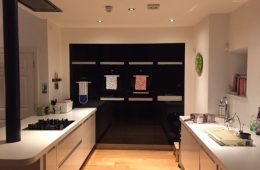
- Warm white (around 2700–3000K): restaurants, hotels, boutiques and hospitality spaces where a relaxed, welcoming feel matters.
- Neutral white (around 4000K): offices, showrooms, supermarkets and general retail, where a clean, natural look helps people work and shop comfortably.
- Cool white (around 5000K and above): warehouses, workshops, car parks and some display applications where crisp, high-contrast light is wanted.
Our guide to 3000K vs 4000K vs 5000K explains these choices in more detail.
Colour rendering
Colour rendering index (CRI) indicates how faithfully a light source shows colours compared with a reference source. For most commercial spaces CRI 80 or above is a sensible minimum. For fashion, food, cosmetics, car showrooms and other places where colour influences buying decisions, CRI 90 or above makes products look their best.
Better outdoor and car park lighting
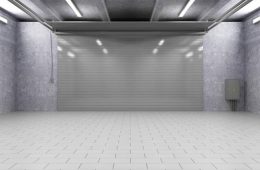
Lux is the measure of how much light falls on a surface. The goal in a car park, forecourt or yard is to reach the recommended lux level evenly and safely with as little wasted energy as possible. Because LED floodlights and street lights use precise optics to direct light where it is needed, a lower-wattage LED fitting can often replace a much higher-wattage metal halide or sodium lamp; it is common for an LED luminaire to replace a 250W metal halide fitting at a substantially lower wattage.
Directional optics also reduce light spill and glare. Too much light, or light pointed in the wrong direction, wastes energy, disturbs neighbours and wildlife, and contributes to light pollution. Well-designed LED outdoor lighting puts the light on the ground rather than into the sky.
Control and flexibility
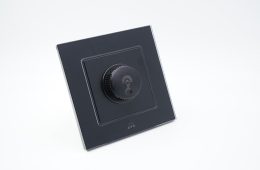
LEDs switch on instantly and can be dimmed smoothly, which makes them ideal partners for occupancy sensors, daylight sensors and timers. A shop can lower display lighting after hours, a car park can dim when empty and an office can respond to daylight from the windows. Track spotlights can be re-aimed whenever a display changes, and RGB fittings can bring colour and movement to facades and signage.
Durable and dependable
LEDs have no filaments or fragile glass envelopes, so they cope well with vibration and handling. They contain no mercury, simplifying disposal. Combined with long rated lifetimes, that adds up to a lighting system that stays reliable with minimal attention.
Getting it right for your business
The best results come from good design rather than simply swapping lamps. RG Alternatives works with commercial clients in Malta, from small shops to car showrooms, offices and hotels. We start with a meeting to understand your requirements, visit the site and then prepare a lighting design showing fitting selection, positioning and lux levels to EU standards. Learn more about our DIALux lighting reports.