
Dimmer switches are usually thought of as a way to set the mood, but they can also reduce how much electricity your lighting uses. Whether they actually save power, and how much, depends on the type of dimmer and the type of light it controls. Here is what you need to know, both for homes and for commercial buildings.
What is a dimmer switch?
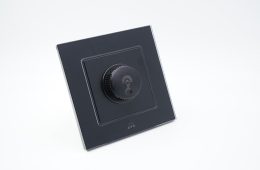
A dimmer lets you adjust the light output of a fitting, or a group of fittings, anywhere between its lowest setting and full brightness. In a home this might be a rotary or touch dimmer on the wall. In offices, hotels and industrial buildings it is often part of a lighting control system, where fittings dim automatically according to the time of day, occupancy or the amount of daylight in the room.
Do dimmer switches save energy?
With modern electronic dimmers, yes. When you dim a light, the dimmer reduces the power delivered to it, so the light consumes less electricity.
This was not always the case. Very old resistive dimmers (rheostats) simply turned the excess power into heat inside the switch, so dimming saved almost nothing. Today’s electronic dimmers work differently and genuinely reduce consumption.
How much do they save?
The saving is not perfectly proportional. Dimming an LED to half its light output will usually cut its power use by somewhat less than half, because the driver still uses a little energy itself. Even so, a light that spends much of its time dimmed will use noticeably less energy over a year than one running at full brightness.
With halogen and incandescent bulbs, dimming saves some energy but makes the bulb less efficient, since a cooler filament produces proportionally less light. With LED, efficiency holds up much better, which makes dimming a more worthwhile energy measure.
Dimming can extend lamp life
LEDs that run at reduced output also run cooler, which is kinder to the electronics and the LED chips. In practice, regular dimming can help fittings maintain their light output for longer.
Should you use a dimmer?
Everyone’s situation is different. If a space always needs full light whenever it is in use, a dimmer will add little except flexibility. A dimmer makes sense when:
- You often need some light but not all of it, such as in living rooms, bedrooms, dining areas and restaurants.
- A space gets plenty of daylight for part of the day, so the artificial light can be reduced.
- Different activities need different light levels, for example a meeting room used for both presentations and discussions.
- New LED fittings are brighter than needed; dimming lets you set the right level without changing fittings.
Dimming in commercial and industrial buildings
In larger buildings, the biggest savings come from automatic dimming rather than wall switches alone:
- Daylight harvesting: sensors measure the daylight in a room and dim fittings near windows so that the combined light stays at the target level.
- Occupancy-linked dimming: corridors, warehouses and car parks dim to a low background level when empty and return to full output when someone arrives. Outdoor car park and street lights can do the same.
- Scheduling: lights dim or switch off automatically outside working hours.
- Maintained illuminance: new LED fittings can run slightly dimmed at first and gradually increase output as they age, so the light level stays constant without wasting energy early in their life.
These systems usually rely on DALI or 0–10V dimmable drivers, which we explain further in our guide to choosing the right LED driver. Pairing dimming with motion sensors often gives the best results.
Dimmers and LED: getting compatibility right
Not all LED products are dimmable. To dim successfully, you need:
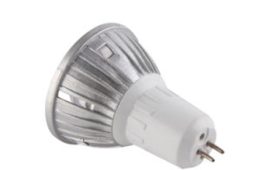
- Dimmable lamps or fittings: look for “dimmable” on the packaging or datasheet. A non-dimmable LED on a dimmer may flicker, buzz or fail early.
- An LED-compatible dimmer: older dimmers designed for halogen often expect a much higher load than a few LED bulbs provide. Trailing-edge dimmers are generally the better match for LED.
- The right load: check the dimmer’s minimum and maximum load for LEDs. Too few bulbs can cause flicker; too many can overload it.
- Matching control signals: fittings with DALI or 0–10V drivers need a compatible controller rather than a standard wall dimmer.
Common symptoms of a mismatch include flickering at low levels, a humming dimmer or bulbs, lights that do not switch off completely, or a very limited dimming range. Swapping to a suitable LED dimmer usually solves the problem.
Smart dimming at home
Smart switches and dimmers add scheduling, scenes and control from your phone. You can set lights to come on softly in the morning, dim automatically in the evening, or switch off when everyone has left. Some smart switches, such as iotty, also help you keep track of how your lighting is used.
The bottom line
Dimmer switches do save power, especially when paired with LED lighting and used regularly. The biggest gains come from switching to LED first and then using dimming and controls to make sure you only use as much light as you need.
LTC LED Lighting’s showroom in St Paul Street, Naxxar, has dimmer switches in a choice of finishes alongside dimmable LED bulbs and fittings. For offices, hotels and industrial sites, RG Alternatives can design a complete dimming and control solution. Request a quote to discuss your project.