
LED bulbs have become the standard choice for lighting homes and businesses, and for good reason. They use far less electricity than traditional bulbs, last many times longer and are available in almost every shape, colour and fitting. But not all LEDs are equal. Here is what makes LED bulbs special, and what separates a good one from a disappointing one.
Energy efficiency
LEDs convert electricity into light much more efficiently than traditional light sources. Compared with an incandescent bulb, a good LED bulb typically uses up to 80–90% less energy for the same amount of light. Compared with halogen, the savings are similar, and LEDs also outperform compact fluorescent lamps.
In practical terms, an LED bulb giving the same light as an old 60W incandescent typically uses somewhere around 7–9W. Multiply that across every light in a home or business, and the reduction in electricity bills is substantial.
Long lifespan
For many people, the most noticeable advantage of LEDs is how rarely they need replacing.
- Incandescent bulbs typically last around 750–2,000 hours.
- Halogen bulbs typically last around 2,000–4,000 hours.
- Fluorescent tubes and compact fluorescents typically last somewhere around 8,000–15,000 hours.
- LED bulbs are commonly rated at 15,000–25,000 hours, with many LED fittings rated at 50,000 hours or more.
To put that in perspective, a fitting rated for 50,000 hours, used for 10 hours a day, would last almost 14 years. Fewer replacements mean less cost, less waste and less inconvenience, especially for lights in high ceilings or awkward places.
LEDs fade rather than burn out
Traditional bulbs fail suddenly when their filament breaks. LEDs behave differently: their light output declines gradually over a long period. Their rated life is usually expressed as an L70 figure, the number of hours until the LED produces 70% of its original light output. Even after that point, an LED will often keep working for years, just not at full brightness.
Other advantages
- Instant full brightness: no warm-up time, unlike many fluorescent lamps.
- Cool light: far less heat is directed into the room and onto lit objects. See Do LED lights get hot?
- Durability: no fragile filament, so LEDs cope better with vibration and knocks.
- Choice of colour: warm, neutral and cool white, tunable white and colour-changing options.
- Dimming and control: many LEDs dim smoothly and work with sensors and smart controls.
- No mercury: unlike fluorescent lamps, LEDs contain no mercury.
Quality is king
An LED’s impressive rated lifespan depends heavily on how well it is made. Poor design or cheap components can dramatically shorten its life. That is why it is important to buy from a reputable manufacturer and supplier.
The driver and its components
Every LED bulb contains a small driver that converts mains electricity into the low-voltage supply the LEDs need. In many cases, it is the driver, not the LED chip, that fails first. A common weak point is the electrolytic capacitor, a component that dries out over time, especially when it gets hot. Better-quality drivers use long-life capacitors rated for higher temperatures, or designs that reduce reliance on them, so that the driver lasts as long as the LEDs it powers. If an LED bulb fails well before its promised hours, poor driver components are often the reason.
Heat management
LEDs need a well-designed heat sink to draw heat away from the chip. If the heat sink is too small, poorly connected or badly designed, the LED overheats, loses brightness quickly and can fail early. Heavier bulbs with substantial metal heat sinks are usually a good sign.
Light quality
Quality also shows in the light itself. Look for:
- A colour rendering index (CRI) of at least 80, or 90 for areas where colour matters.
- Consistent colour from bulb to bulb, so a room of spotlights looks uniform.
- Low flicker, for comfort.
- Honest specifications for lumens, rated life and colour temperature.
Is it worth paying more?
A quality LED bulb may cost more than a cheap one, but it is almost always better value over its life. Long lifespan, low energy use and reliable performance more than make up for the higher purchase price. The cheapest bulb is rarely the cheapest option in the long run.
A technology that keeps improving
LED technology has developed rapidly and continues to improve in efficiency, light quality and control. That means today’s products are better than ever, and that upgrading older LED installations can still bring benefits in some cases.
Choosing the right LED bulb
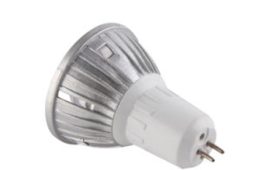
LED bulbs come in many shapes for different uses: GU10 spotlights, standard and globe bulbs for ceiling and table lamps, candle bulbs for chandeliers and wall lights, and filament-style bulbs for decorative fittings. When choosing, check the cap type, lumens, colour temperature and whether you need a dimmable version. Our guide to GU10 bulbs covers spotlights in detail.
LTC LED Lighting in Naxxar stocks a full range of LED bulbs, including candle, globe and other shapes for chandeliers, table lamps and ceiling fittings, in different colour temperatures. For larger projects, RG Alternatives can recommend and supply the right LED products. Contact us to discuss your requirements.