
Good outdoor lighting is easy to recognise. After sunset the house looks welcoming, entrances and paths are clear, steps are easy to see and there are no deep shadows near the doors. Achieving that result is mostly a matter of planning. Before choosing any fittings, list what you want your exterior lighting to do. These five basics will help you build a plan that is safe, secure, attractive and economical to run.
1. Safety
Start with the places where people walk. Front entrances, side doors, garden paths, driveways and especially steps should be evenly lit and free of confusing shadows. Steps are a frequent cause of falls, so give them particular attention. Common ways to light outdoor stairs include:
- Recessed step or wall lights set into the riser or the side wall
- Waterproof LED strip lighting fitted under each tread or nosing
- Low bollards or post lights placed beside the flight
- Lights mounted on a post or handrail
The right choice depends on the construction, whether stone, concrete or timber decking, and on how much of the fitting you want to see. Aim for light that shows the edge of each step clearly without shining into people’s eyes.
2. Security
Security overlaps with safety, but it is also about when lights come on. Motion sensors on some outdoor fittings switch on the light when someone approaches, which can startle an intruder and is convenient for you when arriving home. Bear in mind that cats and other animals will trigger them too, so position sensors carefully, especially near bedroom windows.
A porch or entrance light that switches on at dusk and off at bedtime suggests the house is occupied. Timers and dusk-to-dawn photocells automate this. If you use a timer while you are away, vary the schedule rather than switching at exactly the same time every night, as a rigid routine is easy to spot.
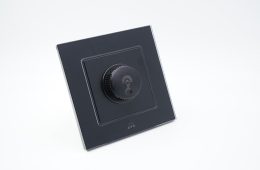
Smart controls take this further. Smart switches and app-controlled fittings let you check and switch your lights remotely, and change schedules from your phone. Our article on iotty smart switches explains one simple way to add this control at home.
3. Garden and architectural features
This is where outdoor lighting becomes enjoyable. Look for features worth showing off at night: a sculptural tree, a palm, a textured limestone wall, a pergola or terraced planting. Subtle uplighting from the ground brings these to life, while wall grazing, with a fitting placed close to the wall and aimed along it, emphasises texture.
Water features offer special opportunities. Lights in or around pools, ponds and fountains create beautiful reflections and movement. Use only fittings rated for the location: anything submerged must be specifically designed and rated for underwater use (typically IP68), and pool lighting should be installed by a qualified electrician.
A little goes a long way. Highlight two or three features rather than lighting everything, and choose warm white light, which generally flatters planting and natural stone.
4. Outdoor living
In Malta’s climate, terraces, roofs, courtyards and gardens are used for much of the year, so treat them as outdoor rooms. Combine a general light for practical tasks, such as clearing up after a barbecue, with softer accent and ambient lighting for relaxing. Wall lanterns, festoon-style string lights, LED strips under benches or along planters, and decorative pendants on covered terraces all help set the mood.
Include dimming or separate switching where you can, so you can turn the lighting up for a gathering and down for a quiet evening. And always check that each fitting has an appropriate IP rating for its position: IP44 is a common minimum for sheltered outdoor locations, while fittings exposed to rain and sea air usually need IP65 or higher and corrosion-resistant finishes.
5. Energy efficiency
Outdoor lights often stay on for many hours a night, so efficiency matters. LED fittings typically use a fraction of the energy of halogen or incandescent lamps for the same light output and last many times longer, which also means less climbing up ladders to change bulbs. Combining LEDs with sensors, timers and photocells ensures lights are only on when they are useful, and reduces light pollution for your neighbours and the night sky. If you would like to estimate the difference, our guide on how much LED lights save per year shows the calculation step by step.
Put your plan on paper
A simple sketch of your property, marking doors, paths, steps, features and power points, is the best starting point. Note which areas need to be lit for safety, which for security and which purely for effect, then choose fittings to match.
Bring your sketch to the LTC LED Lighting showroom on St Paul Street, Naxxar, where you can see a range of outdoor fittings, or let the RG Alternatives team help you plan a larger project. Get in touch with us to discuss your outdoor lighting.