
Staircase lighting is rarely the first thing people think about when planning lighting for a home or building. Often it is only considered late in the process, when it becomes difficult to hide cables and wiring. Yet well-lit stairs are both a safety essential and an opportunity to add real character to a space. Here is how to approach staircase lighting, from the practical questions to the design ideas.
Start with safety: who will use the stairs?
The first question is who will be using the staircase. In a private home, residents know the stairs well, although lighting still matters for children, older relatives and guests, and for moving around at night.
In apartment blocks, offices, hotels, restaurants and other public buildings, stairs are used by many people, day and night, who may be unfamiliar with them. Older people and those with visual impairments need clear, even light. Poorly lit stairs, deep shadows and glare can cause trips and falls, which can lead to serious injuries. Good staircase lighting should:
- Make each step and its edge (the nosing) clearly visible.
- Avoid strong shadows falling across the treads.
- Avoid glare from lights shining into the eyes of people going up or down.
- Be controllable from both the top and the bottom of the stairs.
In common areas of apartment blocks and commercial buildings, staircases also form part of the escape route and need emergency lighting. Our guide to LED emergency lighting explains the basics.
Which type of lighting should you choose?
There are many ways to light a staircase, and the only real limit is your imagination. Should the light come from the steps, the wall, the ceiling, or a combination? Here are the most popular options.
LED strip lights under each step
LED strips mounted under the nosing of each tread, or along the side of each step, create a striking floating effect while lighting every step clearly. Strips are flexible and can be cut to the exact width of your stairs. For a professional finish, mount them in an aluminium profile with a diffuser, which hides the individual LEDs, gives a smooth line of light and helps the strip stay cool. Strips are available in different colour temperatures, from warm to cool white, and in colours including RGB for a more dramatic effect.
Wall-mounted step lights
Small recessed lights set into the wall beside the stairs, typically one every step or every second or third step, wash light across the treads at low level. They give excellent visibility without glare and are a good choice for both homes and public buildings. Glass staircase lights add a decorative touch and can complement contemporary interiors.
Handrail lighting
An LED strip set into the underside of a handrail lights the stairs from just above step level. It is subtle and very effective, especially on modern glass or steel balustrades.
Ceiling and pendant lighting
In stairwells with high ceilings, a statement pendant or chandelier can be a beautiful centrepiece. Make sure it is positioned so it does not dazzle people walking down, and that bulbs can be reached for maintenance. Downlights over a staircase should be placed so they light the treads from the front, rather than casting your shadow ahead of you.
In-ground and outdoor step lights
For external steps, garden stairs and terraces, use fittings rated for outdoor use. In-ground spotlights or recessed brick lights can light steps safely and add atmosphere. In Malta’s coastal climate, choose materials that resist corrosion.
Colour temperature and brightness
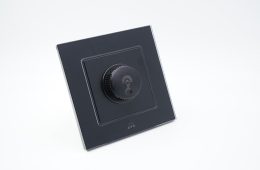
Warm white (around 2700–3000K) creates a welcoming feel in homes, while neutral white (around 4000K) suits offices and public buildings. Step lighting does not need to be very bright, since its job is to show the steps clearly, not to light the whole room. Dimmable or tunable LEDs let you adjust the atmosphere, for example lower levels at night. Our guide to colour temperatures explains the options.
Controls and sensors
Staircase lighting works brilliantly with motion sensors. Lights can switch on automatically as someone approaches, and some systems even light each step in sequence as you climb. In homes, a low-level night setting on step lights provides safe guidance without waking anyone up. At minimum, use two-way switching so the lights can be controlled from both ends.
Does the product meet your needs?
There is a vast choice of LED products, and comparing datasheets can be confusing. Some details matter more than others for stairs:
- Lumen output: enough to see clearly without glare.
- Colour temperature: consistent with surrounding lighting.
- IP rating: for outdoor or damp areas.
- Installation requirements: drivers, cable routes and recess depth.
- Dimming and control compatibility.
Plan early
The single most important tip is to plan staircase lighting early, ideally before plastering, tiling or installing the staircase itself. Cables for step lights and strip drivers need to be routed in advance, and recesses need to be prepared. Retrofitting is possible, but it is more disruptive and the options are more limited.
LTC LED Lighting in St Paul Street, Naxxar, has LED strip lights in a range of colour temperatures and colours, glass staircase lights and in-ground spotlights, and our staff can guide you through the options one to one. For larger projects, explore our lighting design and planning service.