
LED lighting has gone from a niche technology to the standard choice for homes in just a few years. If you still have halogen spotlights or older bulbs in some rooms, you may wonder whether replacing them is really worth it. Here are the five main benefits of LED lights, and why they make sense for almost every home.
1. Much lower energy use
The biggest benefit is efficiency. Traditional incandescent and halogen bulbs turn most of the electricity they use into heat rather than light. LEDs are far more efficient, typically using around 75–85% less energy than incandescent or halogen bulbs to produce a similar amount of light. Compared with compact fluorescent lamps, the gap is smaller but still in LED’s favour.
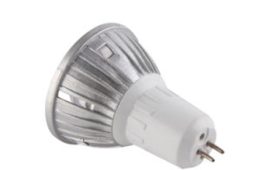
LEDs are also directional. A traditional bulb sends light in every direction, much of it into the fitting or the ceiling. LEDs emit light over a narrower angle, so it is easier to direct light where you actually need it. In recessed downlights and spotlights especially, this means more useful light for every watt.
Lower energy use translates directly into lower electricity bills, especially for lights that are on for many hours each day, such as kitchen lighting or outdoor lights. Our guide on how much LED lights save per year shows how to estimate the savings for your own home.
2. A far longer lifespan
A good-quality LED bulb is typically rated for 15,000 to 50,000 hours, depending on the product. By comparison, a traditional incandescent bulb lasts around 1,000 hours, a halogen typically 2,000 to 4,000 hours, and compact fluorescent lamps somewhere in between, commonly 6,000 to 15,000 hours.
In practice, that means an LED in a room used for a few hours a day can last many years. That makes LEDs particularly good for:
- Outdoor and security lighting that stays on all night
- Fittings that are awkward to reach, such as high ceilings, stairwells and chandeliers
- Rooms where lights are used for long periods, such as kitchens and living rooms
Unlike traditional bulbs that fail suddenly, LEDs usually fade very gradually over their life. Rated lifetime is normally quoted as the point at which output has dropped to 70% of its original level.
3. Better value over time
When LEDs first appeared, the price was a major barrier. Costs have fallen dramatically since then, and quality LED bulbs are now affordable for every home. Even where an LED costs more to buy than a traditional bulb, the combination of lower running costs and far fewer replacements means it is almost always the cheaper option over its lifetime.
LEDs are also more robust. Incandescent, halogen and fluorescent lamps rely on fragile glass or quartz and, in some cases, delicate filaments. LEDs are solid-state components mounted on circuit boards, so they cope much better with knocks and vibration. They are not indestructible, but they are much less likely to break.
4. Better, more flexible light
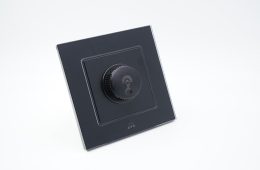
LEDs are available in a wide range of colour temperatures, from warm white for cosy living spaces to neutral and cool white for kitchens, bathrooms and work areas. Many are dimmable, and smart LEDs can change brightness and colour from an app. They reach full brightness instantly, with no warm-up time, and good-quality LEDs offer high colour rendering so colours look natural.
Their small size has also changed lighting design. LEDs fit into slim panels, strip lights, compact spotlights and decorative fittings that would have been impossible with older technology, so there is an LED solution for almost any style of home.
5. Kinder to the environment
Using less electricity means lower carbon emissions from power generation. Because LEDs last longer, fewer bulbs are manufactured, transported and thrown away. And unlike fluorescent tubes and compact fluorescent lamps, LEDs contain no mercury, which simplifies disposal. At the end of their life, LED lamps should still be recycled as electrical waste rather than placed in household rubbish. In Malta, they can be taken to a civic amenity site or another authorised collection point for electrical waste (WEEE).
LEDs also produce very little ultraviolet light and less heat directed at the lit object than halogen spotlights, which is better for artwork, fabrics and food displays.
Making the switch
You do not need to replace everything at once. Start with the lights you use most, then replace the rest as old bulbs fail. Check the cap type, brightness in lumens and colour temperature before you buy, and choose dimmable LEDs where you have dimmer switches. Our article on choosing the best LED bulbs for your home explains what to look for.
The LTC LED Lighting showroom on St Paul Street, Naxxar, has a wide range of LED bulbs and fittings, and our team is happy to help you find the right replacements. If you have questions about saving energy at home or in your business, get in touch with RG Alternatives.